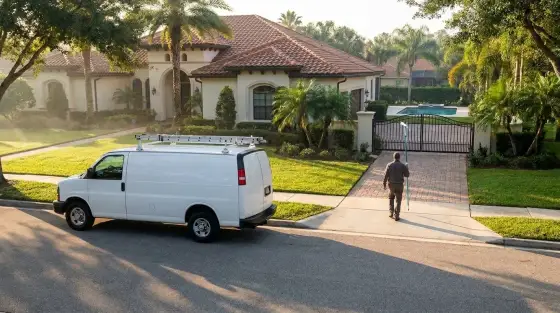
A clean pool every week. Chlorine and pH logged every visit.
Send one RFP. Insured pool vendors send back priced proposals.
- Skim, brush and vacuumBaskets emptied, filter checked, chemicals added.
- Chlorine and pH, every visitFree chlorine and pH are recorded each time. A reading outside the normal range is flagged.
- A photo of the finished workRecording a visit requires a photo of the finished work.
- Your pools on your community mapMark each pool on your map. Every report is filed under it.
Weekly pool service. Skimmed, brushed and vacuumed, baskets emptied, water read.
Visit report
Requested
Monday, October 12, 2026 · 7:30 AM
On site
7:58 AM – 8:42 AM · 44m on site
Completed
Monday, October 12, 2026 · 8:42 AM
2 photos · 1 at check-in, 1 of the finished work
What the vendor recorded
Work performed
Skimmed ✓Vacuumed ✓Brushed walls ✓
Without VendoRFP, and with it.
| Question | Without VendoRFP | With VendoRFP |
|---|
| Who can read Thursday’s chlorine? | Whoever opens the binder | Your board, from its dashboard |
|---|
| A low chlorine reading | Noted, if noted | Flagged, and stored as read |
|---|
| Visit reports | Not kept | A photo on every visit |
|---|
| Insurance checked | At signing, if then | Before a vendor can propose |
|---|
| Who picked the vendor | Whoever called back first | You, from written proposals |
|---|
| Where the invoices land | Whichever inbox they hit | Every invoice in one place |
|---|
Before you bring it to the board
What boards ask us first.
What does it replace?
It replaces the certificate folder, the email chain and the group text. Your vendors’ reports, invoices and insurance live in one place.
Who holds the contract?
You do. You read the proposals side by side, pick one, and sign with that vendor yourself.
What happens when a company’s insurance lapses?
Your board gets an email fourteen days before it expires. From the next day, that vendor cannot propose at your community until it renews.
How does the board vote on a proposal?
Put the proposals to a vote from your dashboard. Each board member gets a secure ballot link. The tally is ready when the vote closes.
Do we have to switch vendors?
No. Invite the vendor you already use. They join for free and file their insurance.
What does it cost the association?
It is free for one community, with unlimited RFPs. You pay each vendor its own price. Sales tax is its own line.
Can the manager run it instead of the board?
Yes. A manager can run every community. The manager sets what each board member can see.
What do the vendors get out of it?
A schedule for their crews, a crew app built for check-ins and their own invoicing. All free to join.
What does a pool vendor record on every visit?
Free chlorine and pH, a checklist and a photo of the finished work. A visit cannot close without them.
Send your pool RFP.
Insured pool vendors price it per visit or per month. Each proposal says whether chemicals are included.