

Start your own porter company
Guidance for starting a porter company: what porter service is, the company steps to take first, hiring a crew, and the insurance and credentials communities ask about.
This is general, preliminary information to help you get started. It isn’t legal, tax, insurance or financial advice, and rules differ by state, city and situation. Before you decide anything, check with a lawyer, an accountant and a business advisor. They have the final say.
A porter company keeps a community’s common areas clean and orderly between larger cleanings. This guide covers the business side: what to set up, who you would hire, and what a community checks before it hires you.
What the work is
This is our own description, written as guidance. Porter service is a trade term, and the official sources below do not define it.
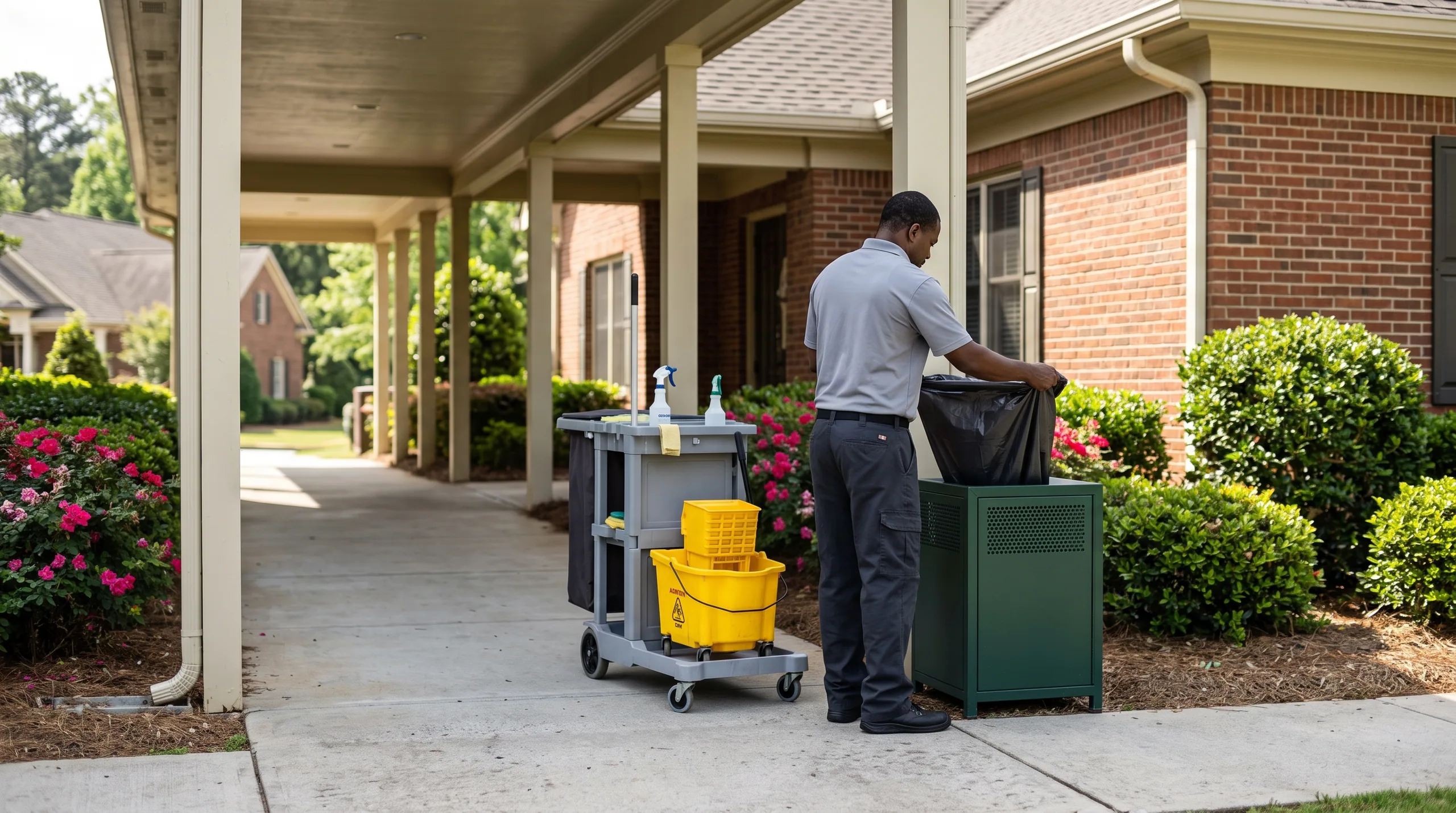
A porter typically handles the daily upkeep of shared spaces: trash, restrooms, the clubhouse, the pool deck, walkways and litter on the grounds. Some communities schedule a porter every day and others a few visits a week, so the scope in each proposal is yours to write down.
- BLS describes the closest federal occupation, janitors and building cleaners, as keeping buildings clean, sanitary, orderly and in good condition. (U.S. Bureau of Labor Statistics, as of Oct 6, 2026)
Keep going:
Set up the company
Start with the same short list any service company uses. Each step has its own page that walks through it, so this guide does not repeat them.
- SBA's launch guide lists, among its steps, registering the business, getting federal and state tax ID numbers, applying for licenses and permits, opening a business bank account and getting business insurance. (SBA, as of Oct 6, 2026)
- Most states have you register a business with the Secretary of State's office, a business bureau, or a business agency. (SBA, as of Oct 6, 2026)
- License and permit requirements and fees vary by business activity, location and government rules. (SBA, as of Oct 6, 2026)
Keep going:
- Your setup checklist
- EIN
- Business types
- Business registration
- Insurance
- Certificates of insurance
- Licenses and certifications
Hiring a crew
Porter work is hourly and often early. Decide how you will pay your people, and keep time records from the first shift.
- SBA's payroll checklist for a first hire includes getting an EIN, checking state and local tax IDs, deciding between contractor and employee, and collecting a completed W-4. (SBA, as of Oct 6, 2026)
- The IRS common-law test for employee versus independent contractor weighs behavioral, financial and relationship evidence of control and independence. (IRS, as of Oct 6, 2026)
- The IRS says to ask each new employee for a signed Form W-4 when they start work. (IRS, as of Oct 6, 2026)
- All US employers must complete Form I-9 for every person they hire in the United States, citizens and noncitizens alike. (IRS, as of Oct 6, 2026)
- Employers must get each employee's name and Social Security number for Form W-2. (IRS, as of Oct 6, 2026)
- Employers deposit and report withheld federal income tax and both the employer and employee Social Security and Medicare taxes, and report wages paid. (IRS, as of Oct 6, 2026)
- The FLSA requires overtime at not less than one and one-half times the regular rate after 40 hours in a workweek for covered nonexempt workers. (U.S. Department of Labor, Wage and Hour Division, as of Oct 6, 2026)
- SBA's guide lists workers' compensation (through a commercial carrier, self-insurance or a state program) among employee benefits, and the rules depend on your state. (SBA, as of Oct 6, 2026)
What a community checks for porter work
For porter work, the rulebook also asks for one trade document before you can propose:
- Background check
Insurance and credentials
Communities often ask for proof of insurance before they hire.
Each community sets its own insurance requirement when it writes an RFP, and your documents are checked against it before a proposal goes in.
- General liability. Required to propose. It has to be on file and current before you can propose. Joining needs no document.
- Workers’ compensation. Only where a community asks*.
- Commercial auto. Only where a community asks*.
- Professional liability. Only where a community asks*.
- Not needed to join. A community can require it on an RFP it posts.
Each coverage is explained in the insurance section of the vendor setup guide.
Keep going:
The scope is the product
This is our own description, written as guidance. Porter service has no official definition, so each community decides what it means, and your proposal is where you write it down.
A good scope names the areas you cover, the tasks at each one, how often, and what you leave to others. Restrooms, trash, the clubhouse, the pool deck and the walkways are common places to list. Anything not in the scope should be a separate conversation.
Schedule and crew
Most porter work is a loop: the same route, the same order, on set days. A community learns your schedule, and you keep it.
Many porter companies run a crew lead who knows the property and a small bench who can cover a shift. Whoever shows up should know the scope without asking.
Show what was done
Boards remember problems, not good weeks. A short record of each visit, with the date, who was there and what was done, answers most questions before they are asked.
How the work runs once you have it
One crew app built to cover every trade you work, with a photo check-in on arrival.
Each crew sees today’s stops across every community you serve.
Send invoices to the community and see when they are approved and paid.
Keep going:
What the community sees
Vendors check in on site with a photo, so you see who came, when, and what they did.
Paperwork behind the service
Your crew is on your payroll or on contract. Either way, set it up on paper before the first shift.
Keep going:
Keep reading
Sources
- Janitors and Building Cleaners (Occupational Outlook Handbook). U.S. Bureau of Labor Statistics. As of Oct 6, 2026.
- Launch your business (SBA counseling guide; business-guide URLs redirect here). U.S. Small Business Administration. As of Oct 6, 2026.
- Manage your business (SBA counseling guide). U.S. Small Business Administration. As of Oct 6, 2026.
- Independent contractor (self-employed) or employee?. Internal Revenue Service. As of Oct 6, 2026.
- Hiring employees. Internal Revenue Service. As of Oct 6, 2026.
- Employment taxes. Internal Revenue Service. As of Oct 6, 2026.
- Fair Labor Standards Act (FLSA). U.S. Department of Labor, Wage and Hour Division. As of Oct 6, 2026.
Official pages change. Each line shows the day we last read it.
Propose on the work communities post.
Joining is free. A person here reads your documents before you propose.